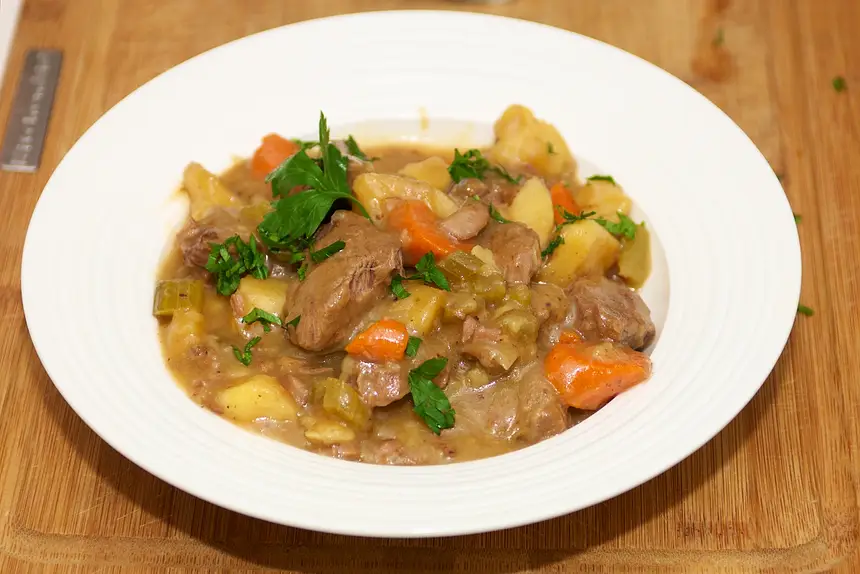
Leftover Beef Miroton


Submitted by Broom
Beef miroton is a classic French method for transforming leftover roast beef into a new meal. Sliced beef simmered in a tangy onion-vinegar sauce, topped with bread crumbs, and baked until crisp.
YIELD
4 servingsPREP
10 minCOOK
20 minREADY
30 minThe French figured this out centuries ago: leftover roast beef doesn’t have to be sad. Miroton is the bistro answer to “what do I do with last night’s meat." Browned onions, a splash of vinegar, bouillon, and a quick roux come together into a tangy, savory sauce that gives cold beef a second life.
The vinegar is what makes this dish. It cuts through the richness of the beef and onions with a sharp acidity that keeps every bite interesting. The browned flour thickens the sauce into something that clings to the meat without being heavy.
A shower of bread crumbs on top goes into a hot oven for just 10 minutes. They crisp into a golden crust that contrasts with the saucy meat underneath.
Pro Tips
- Brown the onions properly. They should be deeply golden, not just translucent. This is where most of the flavor comes from.
- Don’t cook the beef in the sauce for too long. It’s already cooked. You’re just warming it through and letting it absorb the sauce. Overcooking makes it tough and dry.
- Use good vinegar. Red wine vinegar is traditional and adds the right bite.
- Slice the beef thin for better sauce absorption. Thick cubes stay dry in the center.
Variations
- Add a tablespoon of tomato paste with the bouillon for a richer, more robust sauce.
- Top with grated Gruyère instead of bread crumbs for a gratineed version.
- Use leftover roast pork or lamb instead of beef. The sauce works with any roasted meat.
Ingredients
Directions
Slice onions and brown in fat.
Add flour and brown.
Then add vinegar, bouillon or water and tomato juice.
Cook together until slightly thickened, stirring constantly.
Season with salt and pepper. Simmer sliced or cubed beef in sauce a few minutes.
Pour into baking dish , sprinkle with crumbs and bake in a hot oven at 400℉ (200℃). for 10 minutes.

Comments